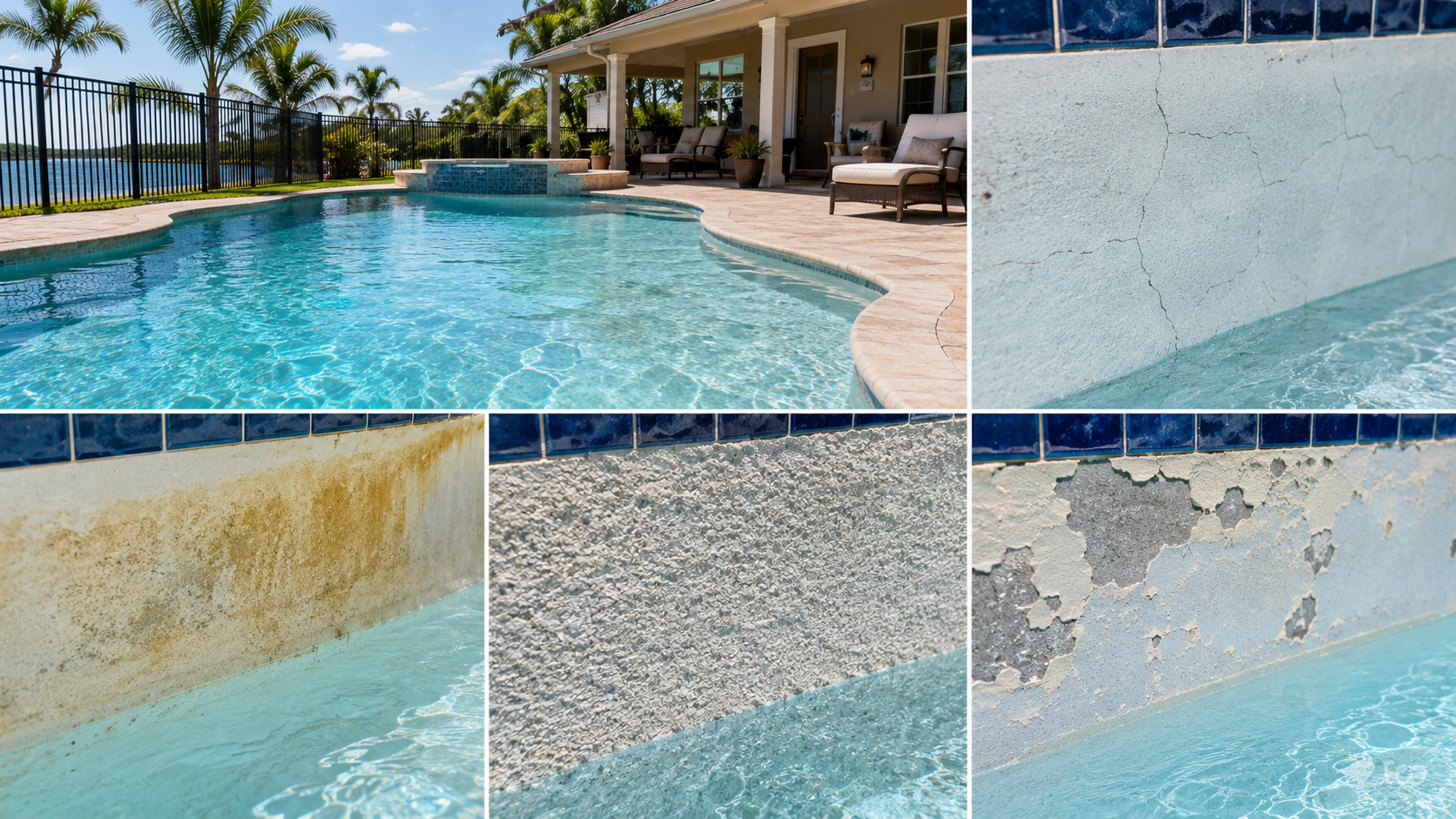
Jacksonville Pool Surface Problems
Rough plaster, stains, cracks, peeling, and fading are not just cosmetic issues. They may be signs your pool surface is wearing down.
Why Pool Surfaces Wear Down in Jacksonville
Jacksonville pools deal with year-round exposure. Strong sun, humidity, heavy rain, storms, debris, chemical changes, and frequent use can all affect how a pool surface looks and feels over time.
At first, surface problems may seem minor. But if they keep coming back, get worse, or make the pool harder to maintain, resurfacing or replastering may be worth considering.
Common Pool Surface Problems
Rough Pool Surface
A rough pool surface can scrape feet, make steps uncomfortable, and make the pool less enjoyable.
Common causes may include:
- Aging plaster
- Etching
- Poor water chemistry
- Surface deterioration
- Exposed aggregate
- Old marcite finish
Pool Stains
Some stains can be cleaned. Others are tied to an aging or porous surface. If stains keep returning after cleaning, the surface may be part of the problem.
Common stain types include:
- Brown stains
- Rust-colored spots
- Gray discoloration
- Greenish patches
- Dark streaks
- Waterline staining
Peeling or Flaking Plaster
Peeling plaster is a strong sign the surface is breaking down. Once plaster starts failing, patching may only delay the need for resurfacing.
You may notice:
- White flakes
- Chipped areas
- Thin spots
- Loose plaster
- Uneven surface texture
Surface Cracks
Small cracks may be cosmetic, but they should still be evaluated. A qualified specialist can help determine whether resurfacing is enough or if repairs are needed first.
Cracks may be caused by:
- Aging plaster
- Surface movement
- Poor previous installation
- Settlement
- Water intrusion concerns
- Structural issues
Faded Pool Finish
Sun exposure, chemicals, age, and water imbalance can leave a pool finish looking dull or washed out.
A faded surface can make the entire backyard feel older, even if the pool still functions. This is common in pools that have not been resurfaced in many years.
Learn About Faded FinishesRecurring Algae Problems
If algae keeps coming back, the surface may be rough or porous enough to give algae places to cling.
Jacksonville's humidity and heavy rain can make this worse, especially during warmer months. A smoother new finish may help reduce surface-related maintenance frustration.
How Jacksonville Weather Makes Problems Worse
Sun Exposure
Strong UV rays can fade finishes and contribute to surface aging.
Heavy Rain
Rain can dilute pool chemicals and shift water balance, increasing maintenance demands.
Humidity
Humidity can support algae growth and make pool care more frustrating.
Storm Seasons
Storm debris, runoff, and water changes can contribute to stains, cloudy water, and surface issues.
Coastal Air
Pools near Jacksonville Beach, Atlantic Beach, Neptune Beach, and Ponte Vedra may face additional wear around tile, coping, and deck areas.
Resurfacing vs. Repair
Minor surface issues may be repairable. But resurfacing may be better if the problems are widespread or recurring.
Repair May Fit If:
- Damage is isolated
- The pool finish is otherwise in good condition
- The problem is recent and limited
Resurfacing May Fit If:
- The surface is worn throughout
- Stains keep returning
- Plaster is peeling
- Roughness is widespread
- The pool is older
- Appearance and comfort are declining
Cost Factors
The cost to fix pool surface problems depends on:
How It Works
Tell Us About Your Pool
Share what you are seeing: rough surface, stains, cracks, peeling plaster, or general wear.
Your Request Is Reviewed
Your information helps determine whether resurfacing, replastering, or remodeling may be the right path.
Request a Local Estimate
Get connected through one clear estimate path with a qualified local pool resurfacing specialist.
Frequently Asked Questions
Tired of Fighting the Same Pool Surface Problems?
Tell us what you are seeing and request a local pool resurfacing estimate.
No bidding circus. No spam. Just one clear path to a qualified local estimate.