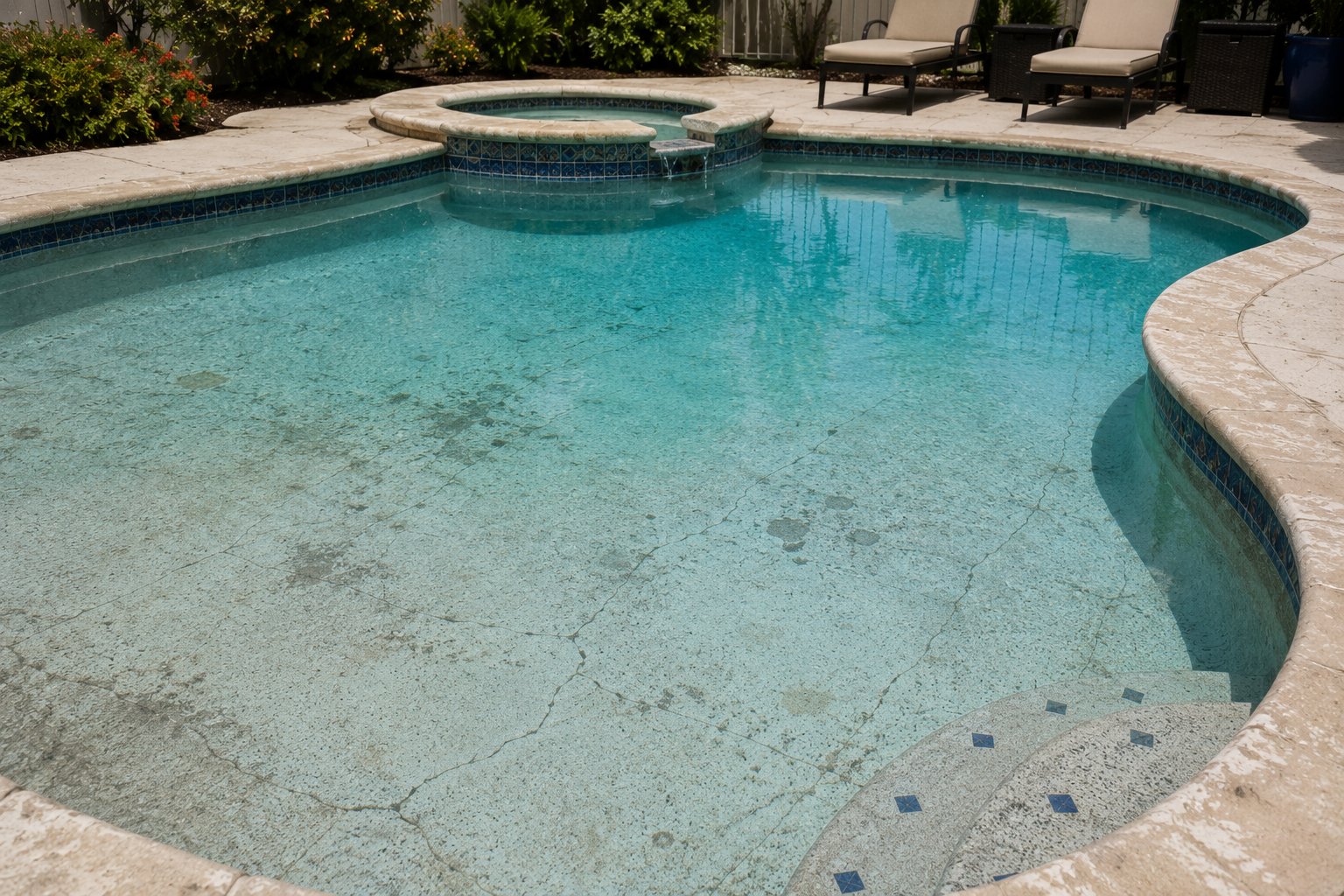
Signs Your Pool Needs Resurfacing
If your pool feels rough, looks stained, or takes more work to keep clean, the surface may be telling you it is time for resurfacing.
Your Pool Surface Usually Shows Warning Signs First
Most pool resurfacing projects do not start with a major failure. They start with smaller issues:
- • The pool feels rough.
- • The finish looks faded.
- • Stains keep coming back.
- • The plaster starts peeling.
- • The water never seems to look as clean as it used to.
For Jacksonville homeowners, these signs can show up faster because pools deal with heat, humidity, heavy rain, storms, and constant chemical balancing.
1. The Pool Surface Feels Rough
A rough pool surface is one of the most common signs resurfacing may be needed. You may notice:
- Scraped feet
- Uncomfortable walls or steps
- Rough patches
- Sharp-feeling areas
- Surface texture that feels worse over time
If the finish is breaking down, resurfacing can restore a smoother, more comfortable surface.
2. Stains Will Not Brush Out
Some stains are caused by normal debris or water chemistry. But if stains remain after cleaning, brushing, or chemical treatment, the issue may be deeper in the finish.
Persistent stains may appear as:
- Brown marks
- Gray discoloration
- Greenish patches
- Rust-colored spots
- Dark streaks
- Uneven fading
When the pool surface itself is worn or porous, stains can become harder to remove.
3. Plaster Is Peeling, Flaking, or Chipping
Peeling or flaking plaster is a stronger warning sign. This may show up as:
- White flakes
- Loose surface material
- Thin patches
- Chipped areas
- Spots where the finish looks exposed
Once plaster begins breaking down, patching may only be temporary.
Learn about pool replastering4. The Pool Finish Looks Faded or Dull
Over time, sun exposure and chemical wear can make a pool finish lose its original color and brightness. Your pool may look:
- Dull
- Washed out
- Uneven
- Old even after cleaning
- Out of sync with the rest of the backyard
This is especially noticeable when the patio, landscaping, or home exterior has been updated but the pool still looks dated.
5. Cracks Are Appearing in the Surface
Small surface cracks may be cosmetic, but they should not be ignored. Cracks can indicate:
- Aging plaster
- Surface movement
- Poor previous finish
- Water intrusion concerns
- Underlying repair needs
A qualified pool renovation specialist can help determine whether resurfacing is enough or whether repairs are needed first.
6. Algae Keeps Coming Back
If algae keeps returning even with regular cleaning and chemical treatment, the pool surface may be part of the problem.
Older, rougher, or more porous surfaces can give algae more places to cling.
Jacksonville’s humidity, heat, and heavy rain can make this problem worse during warmer months.
7. The Pool Is Harder to Maintain Than It Used to Be
Aging pool surfaces can make maintenance feel like a constant battle. You may notice:
- More frequent chemical adjustments
- More brushing
- More staining
- Cloudier-looking water
- More algae issues
- Higher maintenance frustration
If the surface is deteriorating, maintenance alone may not solve the problem.
8. You Are Preparing to Sell the Home
A worn pool can hurt the impression of the entire backyard.
If the pool looks stained, cracked, rough, or outdated, buyers may see it as a future expense.
Resurfacing before listing may help improve the way the pool photographs, shows, and feels during walkthroughs.
This is especially important in higher-value areas like Ponte Vedra, Jacksonville Beach, Atlantic Beach, St. Johns, Mandarin, and Fleming Island.
9. The Pool Is 10+ Years Old
Age alone does not mean the pool needs resurfacing.
But if your pool finish is 10 years old or older and you are noticing roughness, staining, fading, or plaster wear, it may be time to compare resurfacing options.
The exact timeline depends on:
- Finish material
- Water chemistry
- Maintenance history
- Sun exposure
- Storm exposure
- Usage
- Previous repairs
Resurfacing vs. Full Remodeling
Resurfacing may be enough if:
- The pool shape works for you
- Tile and coping are still acceptable
- The deck is in decent condition
- The main issue is the interior finish
A full remodel may be better if:
- Tile is outdated
- Coping is cracked
- Decking is worn
- Lighting is old
- The whole backyard feels dated
What to Do Next
If you are seeing one or more of these signs, the next step is to describe what is happening with your pool. You do not need to know whether you need resurfacing, replastering, or remodeling yet. Start with the symptoms. The right estimate path can come from there.
Tell Us About Your Pool
Share what you are seeing: rough surface, stains, cracks, peeling plaster, or general wear.
Your Request Is Reviewed
Your information helps determine whether resurfacing, replastering, or remodeling may be the right path.
Request a Local Estimate
Get connected through one clear estimate path with a qualified local pool resurfacing specialist.
Frequently Asked Questions
Seeing Signs Your Pool Surface Is Wearing Out?
Tell us what is happening with your pool and request a local resurfacing estimate.
No bidding circus. No spam. Just one clear path to a qualified local estimate.