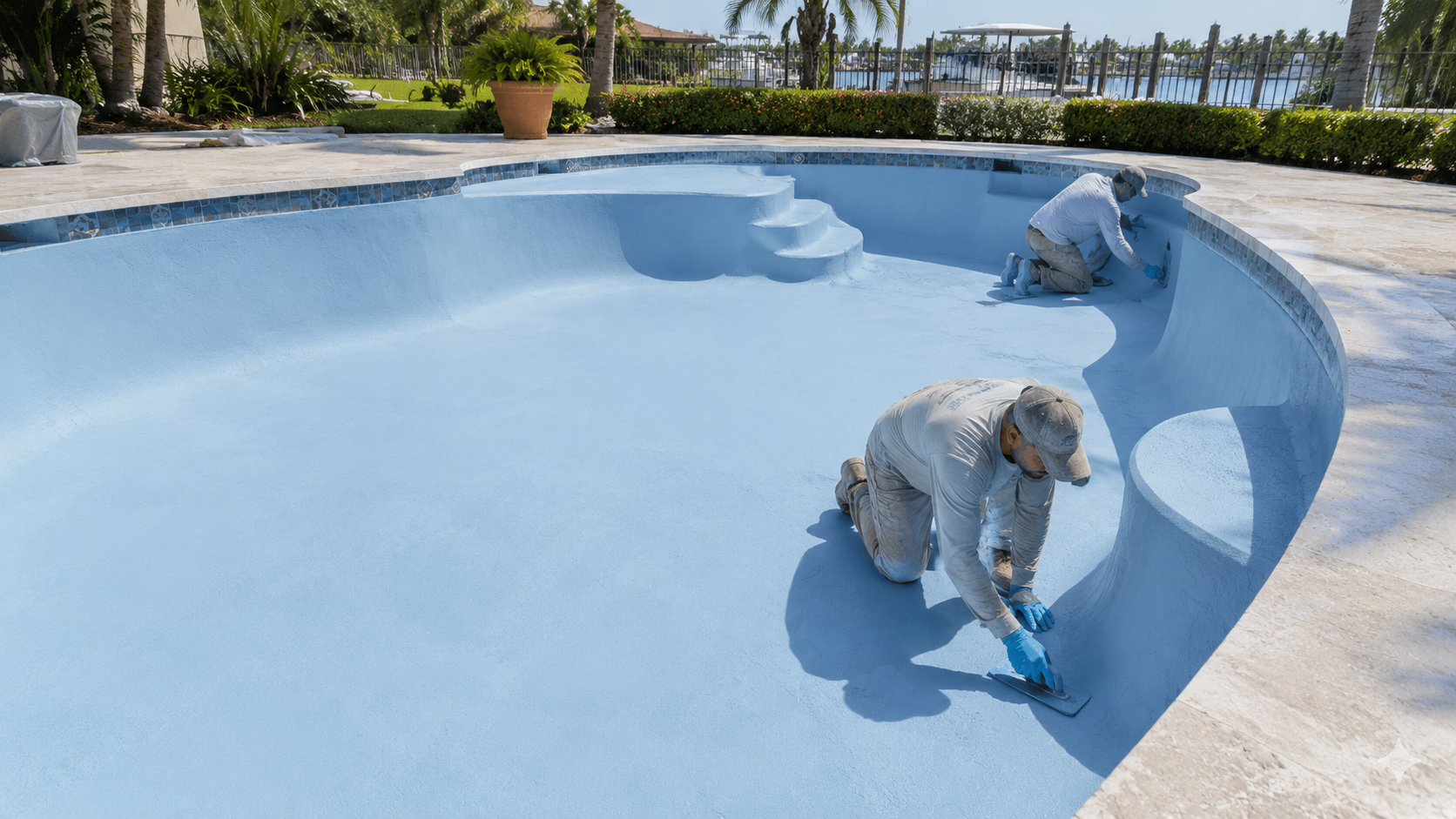
Pool Replastering in Jacksonville, FL
Replace rough, worn, peeling, or stained pool plaster so your pool feels smoother, looks cleaner, and becomes easier to enjoy again.
Is Your Pool Plaster Rough, Peeling, or Worn Out?
Older plaster pools eventually start to show their age.
The surface may feel rough on your feet. The finish may look stained no matter how often you brush it. You may notice peeling, flaking, discoloration, or spots where the plaster feels thin.
Pool replastering removes or prepares the worn plaster surface and applies a fresh interior finish so your pool can feel comfortable and look refreshed again.
Common Signs Your Pool Needs Replastering
You may need pool replastering if you notice:
If the pool structure is still in good shape, replastering may be the practical solution.
Pool Replastering vs. Pool Resurfacing
Pool replastering is one type of pool resurfacing.
Replastering
Usually refers to replacing the plaster or marcite surface.
Resurfacing
Can include plaster, quartz, pebble, aggregate, or other finish options.
If you want a simple surface replacement, replastering may be enough. If you want a more durable or premium finish, you may want to compare quartz or pebble resurfacing options.
Compare pool resurfacing optionsWhy Jacksonville Pools Wear Down
Pool plaster in Greater Jacksonville is exposed to:
- • Strong sun
- • High humidity
- • Heavy rain
- • Storm-season debris
- • Constant water chemistry changes
- • Year-round use
- • Salt air near coastal areas
Over time, these factors can contribute to staining, etching, roughness, and surface breakdown. That is why many older pools in Jacksonville, Mandarin, the Beaches, St. Johns, and Fleming Island eventually need replastering or resurfacing.
What Pool Replastering Can Help Fix
Pool replastering may help improve:
- Pool comfort
- Surface smoothness
- Appearance
- Water clarity perception
- Stain problems caused by old surface wear
- Overall backyard presentation
- Home resale appeal
It can also make the pool feel newer without changing the entire design.
What the Replastering Process May Include
- 1Draining the pool
- 2Preparing the existing surface
- 3Removing loose or damaged plaster
- 4Repairing minor surface issues
- 5Applying new plaster or finish material
- 6Refilling the pool
- 7Startup and water balancing guidance
Exact steps depend on your pool’s condition and the finish selected.
Is Replastering Enough, or Do You Need a Remodel?
Replastering may be enough if:
- • You like the current pool design
- • Tile and coping are still in good condition
- • The deck does not need major work
- • Your main issue is surface wear
A full remodel may be better if:
- • Tile is outdated or cracked
- • Coping is loose or damaged
- • Pool deck is cracked or faded
- • You want a premium backyard upgrade
- • You are preparing to sell the home
- • You want lighting, features, or design changes
How Much Does Pool Replastering Cost?
Pool replastering cost depends on:
- • Pool size
- • Existing plaster condition
- • Surface preparation needed
- • Finish material
- • Repair needs
- • Access to the pool
- • Any tile, coping, or deck add-ons
Basic plaster is usually more affordable than quartz or pebble finishes, but it may not provide the same look or durability.
View Pool Renovation Cost GuideAreas Served
Pool replastering estimate requests are available across Greater Jacksonville, including:
How It Works
Tell Us What You’re Seeing
Share whether your plaster is rough, peeling, stained, cracked, or worn down.
Your Request Is Reviewed
Your project details help determine whether replastering, resurfacing, or remodeling may be the right fit.
Request a Local Estimate
Get connected through one clear estimate path with a qualified local pool renovation specialist.
Frequently Asked Questions
Ready to Replaster Your Pool?
Tell us what is happening with your pool surface and request a local replastering estimate.
Request a Pool Replastering Estimate